What is an international school?
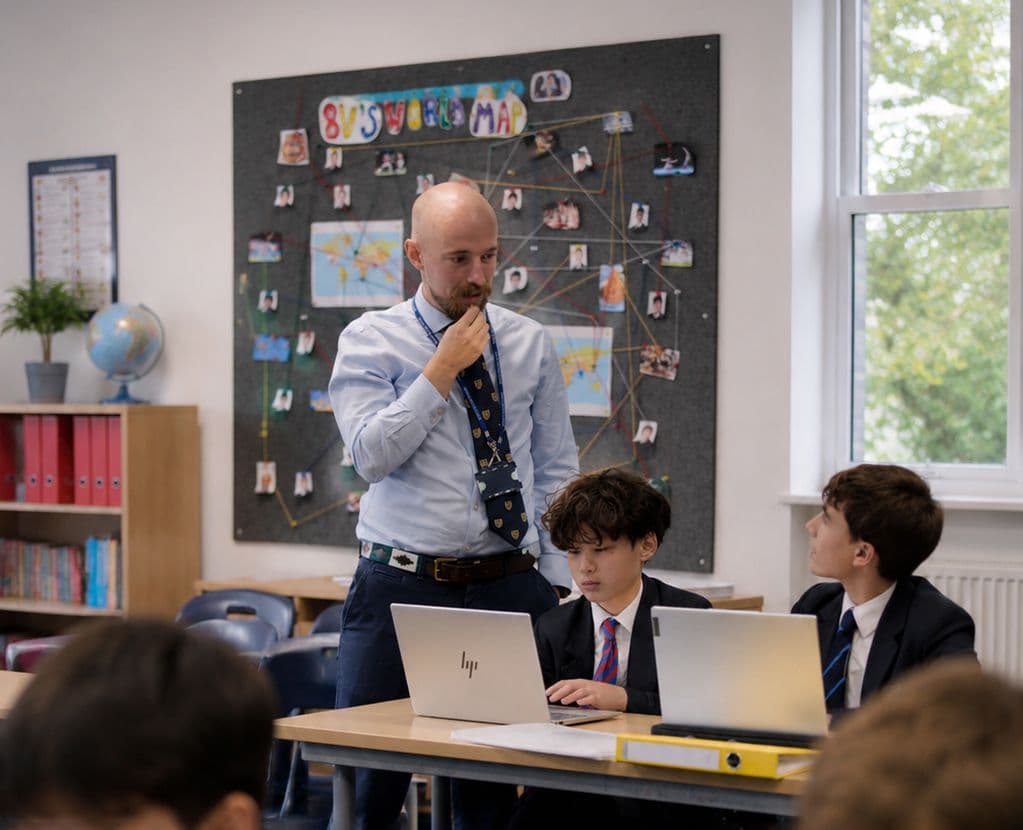
An international school is one where the whole curriculum - teaching, communication, assessment and school life - takes place in a single language, usually English.
In other words, it is not a school that "teaches English"; it is a school that teaches everything in English - Mathematics, Science and History in English, group discussions in English, home-school communication in English, and English at lunchtime too.
The curriculum at an international school follows fully international standards such as Cambridge International (IGCSE, A levels), IB (International Baccalaureate), or the British/American curriculum and does not follow the Vietnamese MOET curriculum. Pupils leave with international qualifications recognised worldwide - by over 2,670 universities in 99 countries, according to Cambridge International.
In Vietnam, many schools call themselves "international" but in fact teach bilingually, or teach the national curriculum with a few extra English lessons. In a genuine international school, English is the only language across the whole school - from the classroom to the playground, and from exams to parent meetings.
What does "100% English" mean in reality?
When a school says it is "100% English", it means:
- Teachers are native speakers or trained to UK/US standards, and teach every subject in English.
- Pupils discuss, present, write essays, take exams, and participate in extracurricular activities in English.
- Textbooks, school notices and reports are all in English.
There is a core difference here that many parents have not realised: ESL (English as a Second Language) and EMI (English as a Medium of Instruction) are two completely different concepts.
In bilingual schools, English is usually taught as ESL. In international schools it is EMI: children do not "learn English" so much as live and think in it.
At King's College School, Wimbledon, a school with nearly 200 years of history in the UK, the entire GCSE/IGCSE and A levels curriculum is taught in English. This is the standard that King's College Wimbledon HCMC directly inherits.
What is a bilingual school?
A bilingual school teaches in two languages. In Vietnam this usually means Vietnamese and English, in ratios that vary from school to school.
The curriculum usually combines the Vietnamese MOET curriculum with an international one (Cambridge, the IB, or the school's own). The typical outcome is a "dual award": a Vietnamese high school diploma alongside an international qualification, where the school offers it in full.
This model has clear advantages: it helps pupils preserve their Vietnamese foundation and the national curriculum, maintain connection with the domestic education system, and the tuition fees are usually more reasonable than international schools.
Parents should be aware, though, that "bilingual" covers a very wide range. Some schools genuinely teach 60-70% in English; others teach only 20-30% in English yet still use the "bilingual" label.
Parents should always ask clearly about the actual ratio: how many subjects are taught in English, how many in Vietnamese, and what the foreign teachers teach, rather than just trusting the generic "bilingual" label.
Comparing international schools and bilingual schools

A deeper difference: Not just "more English"
From the table alone, parents might think the difference is simply the number of English lessons a week. In fact, the real difference lies much deeper - in the way children think.
In an international school, children do not "translate" from Vietnamese in their heads; they form their thoughts directly in English. They think in English when writing an essay, reason in English when solving a maths problem, and argue in English in a history or economics debate - with no step in between.
This creates a huge advantage when the child enters an international university: there is no "language transition" phase because the child is ready from day one. Many Vietnamese pupils in the UK and the US share that the biggest barrier is not knowledge, but academic English: the ability to write essays, analyse texts, present, and debate in English at the university level. Pupils from international schools have been honing this capability for many years.
Which school model suits your child?
There is no model that is simply "better". Each suits a different goal. Here is how to weigh it up:
An international school is suitable when:
- The family has determined a pathway to international universities (UK, US, Australia, Canada, Europe).
- You want your child to think in English from an early age - not just to be "good at English", but to think in it.
- You want the exit qualifications (IGCSE, A levels) to be globally recognised without the need for conversion.
- You want your child in an international environment, with Western educational standards, here in Vietnam.
- You are ready for a long-term investment for the K-12 pathway.
A bilingual school is suitable when:
- The family wants the child to maintain a strong Vietnamese foundation and the national curriculum.
- Flexible goals: can study abroad or attend a domestic university.
- You want your child to have more English exposure than public schools but are not ready for a 100% English environment.
- You need a more reasonable tuition fee level than international schools.
Three questions parents should ask themselves before deciding:
- 10 years from now, where will my child apply to university?
- Do I want English to be the language my child uses to learn, or a language my child learns as an extra?
- What qualifications does my child need to step into the next journey?
The answers to these three questions will help parents clearly determine which model is the most suitable, not because someone says "this school is better", but because it aligns with their own family's goals.
King's College Wimbledon HCMC - British Standard International School
King's College Wimbledon HCMC is a 100% international school, following the British curriculum from Early Years (EYFS) to Sixth Form (A levels).
Here, "100% English" is not a slogan but daily reality. The entire teaching staff is selected according to UK QTS (Qualified Teacher Status) standards: teaching in English, following British educational methods, with standards equivalent to the parent school in London.
Continuous K-12 pathway: EYFS → Primary → IGCSE → A levels - the exit qualifications are Cambridge International certificates, directly recognised by over 2,670 universities in 99 countries.
King's College Wimbledon HCMC inherits the academic legacy from King's College School, Wimbledon, a school founded in 1829 by Royal Charter, ranked as the leading co-educational day school in the UK (Sunday Times Parent Power 2026) and Top 5 best schools in the world (HSBC Hurun Education Global High Schools 2025).
Official exam results at King's College School, Wimbledon:
- 86.1% A*/A at A levels in 2025
- 98.26% grade 9/8/7 at GCSE/IGCSE
- And nearly 25% of pupils enter Oxford or Cambridge each year.
That standard, from the curriculum and methods to the teacher standards, is brought intact to King's College Wimbledon HCMC.

Frequently asked questions when choosing between an international and a bilingual school
Absolutely, but appropriate preparation is needed. Most reputable international schools have an EAL (English as an Additional Language) support programme for pupils who have not yet reached the required English proficiency. The important thing is that the school carefully assesses capabilities before admission and builds a personalized pathway, not letting the child "leapfrog" into the programme when not ready. At King's College Wimbledon HCMC, every pupil is assessed for both English and academic proficiency before entering a class.
This is a very common - and understandable - concern. However, research on language development in children shows: the family language is well maintained when the family actively uses Vietnamese at home, such as conversing, reading books, writing journals, and maintaining a connection with Vietnamese culture. Many international schools also provide Vietnamese Studies or Mother Tongue Language programmes to support this. The family's role here is crucial: the school takes care of the English and academic parts, while the family nurtures the Vietnamese language and identity.
Yes. Under current regulations, all international schools in Vietnam - international or bilingual - must be licensed by the Department of Education and Training or the relevant authority. However, parents need to clearly understand: the exit qualifications of an international school are international certificates (IGCSE, A levels, IB Diploma...), not a Vietnamese high school diploma. This is an important difference parents need to consider when determining the pathway for their child.
Yes, but through a different format. Some major universities in Vietnam (VNU, RMIT, Fulbright...) already accept A levels or IB Diploma results for admission. However, if the family's main goal is a domestic university through the traditional route (National High School Exam), then a bilingual school might be more convenient because the pupil already has a Vietnamese high school diploma. With an international school, the most natural path is international universities, and that is precisely the strength of this model.
Understanding correctly to choose correctly
international schools and bilingual schools are two different models, serving two different goals; neither is "better" or "worse".
But if parents are looking for a continuous K-12 pathway for their child, entirely in English, with international qualifications recognised by 2,670 universities in 99 countries and aimed straight at the most competitive universities in the world, then a British curriculum international school is that very path.
The most important thing is not the "international" or "bilingual" label on the brochure. The important thing is: what does the curriculum actually teach, in what language, what team is teaching the classes, and where does the outcome lead the child.
If you want to learn more about the international school model at King's College Wimbledon HCMC: the curriculum, the teaching staff, and the pathway from preschool to A levels, we invite your family to visit the school to experience it firsthand.
References & Citations:
Cambridge International - Recognition & Acceptance
Cambridge International - English Medium Instruction Overview
HSBC Hurun Education Global High Schools 2025
King's College School, Wimbledon - Examination Results 2025
UCAS - Entry Requirements & Qualifications
Nghị định 86/2018/NĐ-CP - Quy định về hợp tác, đầu tư nước ngoài trong lĩnh vực giáo dục
Want to clearly understand the international school model?
Book a tour at King's College Wimbledon HCMC to experience the 100% English environment firsthand, meet the British teaching staff, and ask any questions you have.
Book a school tour now