
What Is IGCSE? Why It Matters in a British Secondary Education
When exploring international and British educational pathways, you often hear the term “IGCSE”. So what is IGCSE, and why is it such an important milestone in a child's education?
IGCSE is not just the name of an exam. It is the academic foundation that determines whether your child can progress to A levels and, from there, open doors to the world's top universities.
Drawing on official June 2025 exam data from Cambridge Assessment International Education and information from King's College School, Wimbledon, this article explains what IGCSE is.
09 Jul 2026
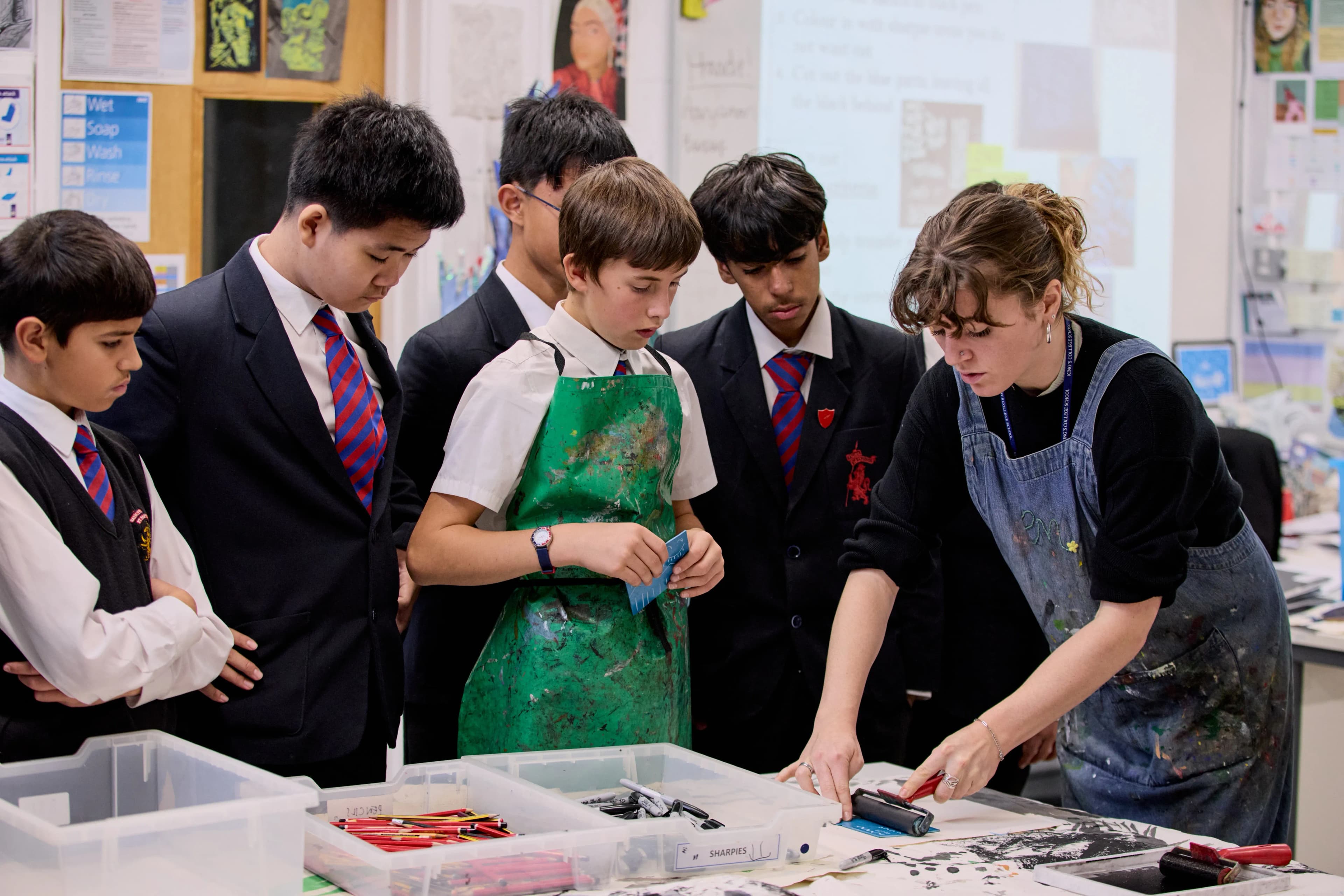
IGCSE stands for International General Certificate of Secondary Education. It is an international secondary qualification developed and managed by Cambridge Assessment International Education (Cambridge International), part of the University of Cambridge.
Introduced in 1988, IGCSE was designed to serve pupils at international schools worldwide, where the domestic GCSE certificate of England and Wales was not suitable for pupils from various educational backgrounds. More than three decades later, IGCSE has become the most widely used international secondary certificate in the world.
According to official statistics from Cambridge International, in the June 2025 exam session alone, IGCSE recorded 740,000 exam entries from over 240,000 pupils across 4,231 schools in 139 countries (an increase of 5% compared to 2024). Counting the entire Cambridge system (including IGCSE, O Level, AS, and A levels), the June 2025 session had nearly 1.7 million exam entries from over 680,000 pupils (a 9% increase over the previous year).
The programme is for pupils aged 14 to 16, equivalent to Years 10-11 in the British education system, or grades 10-11 according to the common calculation at international schools in Vietnam.
This is a question many parents ask when exploring the British curriculum.
GCSE is the official secondary certificate of England and Wales, tied to the national curriculum of these two territories. IGCSE is the internationalised version, designed not to be bound to any specific national educational curriculum. This makes IGCSE more flexible, with a richer subject portfolio, and suitable for pupils from all cultures and different educational systems.
Both GCSE and IGCSE are recognised by universities in the UK and globally. According to data from UCAS (Universities and Colleges Admissions Service, the UK university admissions body), both certificates are accepted equivalently in university application profiles. At King's College School, Wimbledon, the parent school of King's College Wimbledon HCMC founded in 1829, pupils also follow the GCSE/IGCSE pathway before moving up to Sixth Form.
IGCSE study duration
IGCSE spans 2 academic years, equivalent to Years 10 and 11 in the British system. It is the central stage of secondary school and the direct stepping stone to Sixth Form.
At the end of the programme, pupils take the official exams organised by Cambridge International, typically held in May and June annually (primary session) and October–November (secondary session) at Cambridge-authorized examination centers worldwide. The exams are centrally marked by a team of Cambridge examiners in the UK, ensuring objectivity and consistency, independent of individual school teachers.
Worth noting: IGCSE results do not expire, are not tied to any school system, and are recognised in over 160 countries.
How many subjects do pupils take and what do they choose?
IGCSE offers a portfolio of over 70 subjects, far wider than most national secondary programmes. Pupils typically choose between 5 and 9 subjects depending on the orientation of each school.
The subjects are divided into main groups:

A notable trend from the 2025 exams: according to Cambridge International, subjects related to technology and business are experiencing strong growth. Specifically: Enterprise increased by 22%, Business Case studies increased by 7%, Economics increased by 6%, and Computer Science increased by 6% compared to the previous year. This is a signal that IGCSE pupils globally are proactively aiming for future skills.
A point to note: many IGCSE subjects have two levels of study:
- Core: suitable for pupils building their fundamentals.
- Extended: for pupils with good capabilities who want to progress to A levels.
This differentiation ensures each pupil learns according to their actual ability, ensuring no one is left behind, nor is anyone held back.
IGCSE Assessment and Grading System
IGCSE primarily assesses through end-of-programme exams organised and centrally marked by Cambridge, independent of the grades given throughout the school year by individual school teachers. Depending on the subject, there may also be practicals, long-term research coursework, or speaking tests.
Currently, two grading systems are in use:
- A-G scale (traditional)*: A* is the most outstanding grade, G is the minimum pass level. Grade U (Ungraded) means the requirements were not met.
- 9-1 scale (newer): A grade 9 is absolute perfection - even higher than the traditional A*. This is being applied in some subjects and regions.
To progress to A levels, pupils usually need to achieve at least a grade C (or grade 5 on the 9-1 scale) in the subjects they wish to study in-depth next.

If you have only just learned what IGCSE is, this is only the start. The more important question for every parent is: "Why IGCSE - and what does it mean for my child's future?"
IGCSE builds a true foundation for progressing to A levels. This is not a random connection. Both IGCSE and A levels are developed by Cambridge International with a continuous logic: IGCSE builds broad academic thinking, while A levels delves deep into selected fields. A pupil who has truly gone through IGCSE will enter A levels with well-developed thinking skills - able to analyse a problem, build evidence-based arguments, and work independently without step-by-step reminders.
IGCSE tests thinking, not memory - and that is the key difference. A typical IGCSE exam does not ask "list the facts," but rather "analyze," "compare," "evaluate the impact." Pupils need to explain why, not just answer what. This is an essential skill at the university level and in later professional life.
It is a globally recognised qualification that needs no translation or conversion. IGCSE results are a common academic language understood and valued by universities in the UK, US, Australia, Canada, Singapore, and most European countries. No comparison tables or additional approvals are needed. An A* on your child's IGCSE statement of results means the same thing anywhere in the world.
According to UCAS data, IGCSE/GCSE results are a standard part of university admission profiles in the UK: no comparison tables are needed, and no additional approvals are required.
IGCSE is the phase where children discover what they are good at and passionate about. Studying 5 to 9 different subjects over two years is not a pointless spread. It is a valuable opportunity for a 14-16-year-old pupil, who does not yet need to know what they want to do later, to try their hand at various fields and realize where their true interests and capabilities lie. This discovery is the foundation for making in-depth A levels subject choices, rather than choosing based on trends or at random.
The results speak for themselves. At King's College School, Wimbledon, the 2025 GCSE/IGCSE exam results show:
- 98.26% of all exams achieved grades 9, 8, or 7 (equivalent to A*/A)
- 90.6% achieved grades 9 or 8: meaning almost all pupils achieved the most outstanding level
- 67.1% achieved grade 9: the highest absolute score on the grading scale
This is official exam data, marked by Cambridge/Ofqual and publicly published. King's College School, Wimbledon is ranked the leading co-educational day school in the UK (Sunday Times Parent Power 2026) and Top 5 best schools in the world according to the HSBC Hurun Education Global High Schools 2025 rankings. The ranking is based on official exam results, top university matriculation rates, academic reputation, and teaching quality.
Upon completing IGCSE with good results, pupils face three clear directions:
- Progressing to Sixth Form (A levels), the most common path in the British system: studying 3-4 chosen subjects in depth to build an international university admissions profile. This is also the main pathway at King's College Wimbledon HCMC. You can learn more about this stage through the article What Is A levels? A Parent's Guide to the British Sixth Form Pathway.
- Transitioning to the IB Diploma - The International Baccalaureate programme, an option implemented parallel to A levels by many international schools, is also widely recognised by top universities.
- Enrolling in Foundation or vocational programmes - Suitable for pupils who already have a clear orientation toward a specific profession and want to go straight into an in-depth programme.
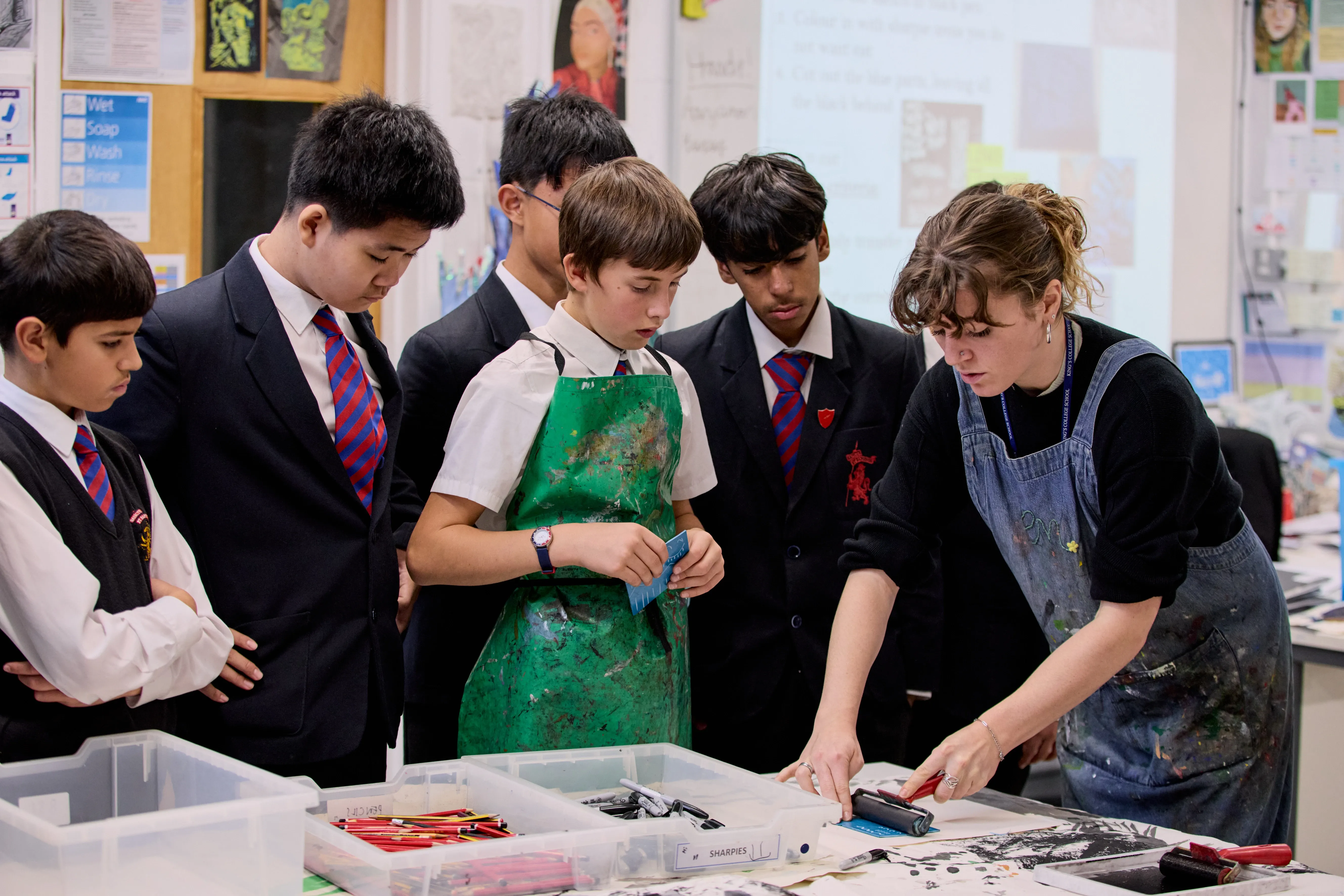
Some schools treat IGCSE as a box to be ticked. Others treat it as a carefully designed journey.
At King's College Wimbledon Ho Chi Minh City, the Secondary School programme following the Cambridge IGCSE standard does not just include subjects and exams. Every subject chosen, and every teaching method applied, is geared toward a more specific goal: helping pupils enter Sixth Form and leading universities with the most solid foundation possible, not only academically, but also in terms of resilience and mindset.
The philosophy of Mind, Spirit and Heart runs throughout the IGCSE years. Pupils do not just study to get high grades; they also study to develop independent thinking capabilities, perseverance in the face of difficult problems, and the ability to collaborate effectively with others. These are qualities that any major university in the world wants to find in an applicant.
The Pastoral Care system ensures no pupil is left behind during the IGCSE phase. Each pupil has a personal tutor, is closely monitored both academically and psychologically, and is supported in making subject choices aligned with their A levels orientation right from the start.
King's College Wimbledon Ho Chi Minh City inherits a tradition of academic excellence from King's College School, Wimbledon, a school founded in 1829 by British Royal Charter. With results of 98.26% achieving grades 9/8/7 in the 2025 GCSE/IGCSE exams, an ISI rating of "Excellent" across all criteria, and nearly 25% of pupils entering Oxford or Cambridge each year.
That standard is the most concrete testament to the quality of the IGCSE → A levels → Top University pathway. And that exact standard is brought intact to King's College Wimbledon HCMC.
What level of English foundation does the child need?
This is the most practical question raised by the majority of parents. And the honest answer is: a child does not need perfect English to begin IGCSE, but does need enough to take in new material and express their thinking in it.
IGCSE is taught and examined entirely in English - from lessons and study materials to exam papers. Pupils need the ability to read and comprehend, construct written arguments, and exchange ideas in English at an academic level.
At King's College Wimbledon HCMC, every pupil's English and academic capabilities are thoroughly assessed before admission. The academic consulting team will work with the family to build a suitable pathway, including specialised English support programmes if necessary, so that no pupil has to "leapfrog" into the programme when they are not yet ready.
Most frequently asked questions by parents
Is studying IGCSE more arduous than the domestic secondary programme?
It is difficult in a different sense. IGCSE does not require pupils to memorize more. It requires pupils to understand more deeply and think more independently. Many pupils transferring from the domestic programme to IGCSE remark that they feel they are truly learning, not just studying for exams, even though the initial adaptation phase takes time.
Can a child study at a domestic school until the end of grade 9 and transfer to IGCSE in grade 10?
Yes, and it is common. Grade 10 (Year 10) is exactly where the two-year IGCSE programme begins. The most important factors to prepare are English proficiency and the habit of self-study. According to the ISC Census 2025 report, independent schools in the UK record a large influx of international pupils joining at exactly this time.
Are IGCSE results taken into account by universities when reviewing applications?
Yes, and it matters. According to UCAS guidelines, universities in the UK, including the Russell Group, consider IGCSE/GCSE results as a standard part of a comprehensive academic profile. Many majors at Oxford and Cambridge specifically require a certain number of grade 9/8/7s at IGCSE as a minimum condition, alongside A levels results.
IGCSE or the domestic programme: which is better for the child?
There is no single right answer. But if you are aiming for your child to attend an international university, especially in the UK, US, Australia, or Canada, IGCSE provides a clear advantage: the certificate is internationally recognised without the need for conversion, academic thinking is trained to the standards expected by universities, and the pathway connects seamlessly to A levels.
If we had to give a brief answer to the question of what IGCSE is, we would not say "a secondary certificate". We would say: these are two years where pupils learn how to think, learn how to ask the right questions, systematically analyze problems, and formulate evidence-based arguments. These are two years of self-discovery, knowing what they are good at and what they truly want before choosing an in-depth path at A levels.
When 740,000 IGCSE exams are registered in just the June 2025 session alone, when King's College School, Wimbledon achieves 98.26% grades 9/8/7, and when the world's most competitive universities consider IGCSE a standard part of their admissions profiles, parents can rest assured that this is a foundation verified by data, not just promises.
And more importantly: IGCSE is the foundation upon which all future academic journeys whether A levels, IB, or any university programme can be built solidly and with true depth.
If parents are exploring what the Cambridge curriculum is and want to know how IGCSE fits their child, we would be glad to talk it through with your family.
Are you looking to learn more about the A levels pathway at King's College Wimbledon Ho Chi Minh City? Come visit the School Gallery to meet directly with the academic consulting team, and learn more about King’s College Wimbledon HCMC.
References:
Cambridge International - June 2025 Results & Global Statistics
UCAS - Entry Requirements & Qualifications
Cambridge IGCSE - Subjects & Syllabuses
King's College School, Wimbledon - GCSE/IGCSE Results 2025
HSBC Hurun Education Global High Schools 2025
King's College School, Wimbledon - ISI Inspection Report